
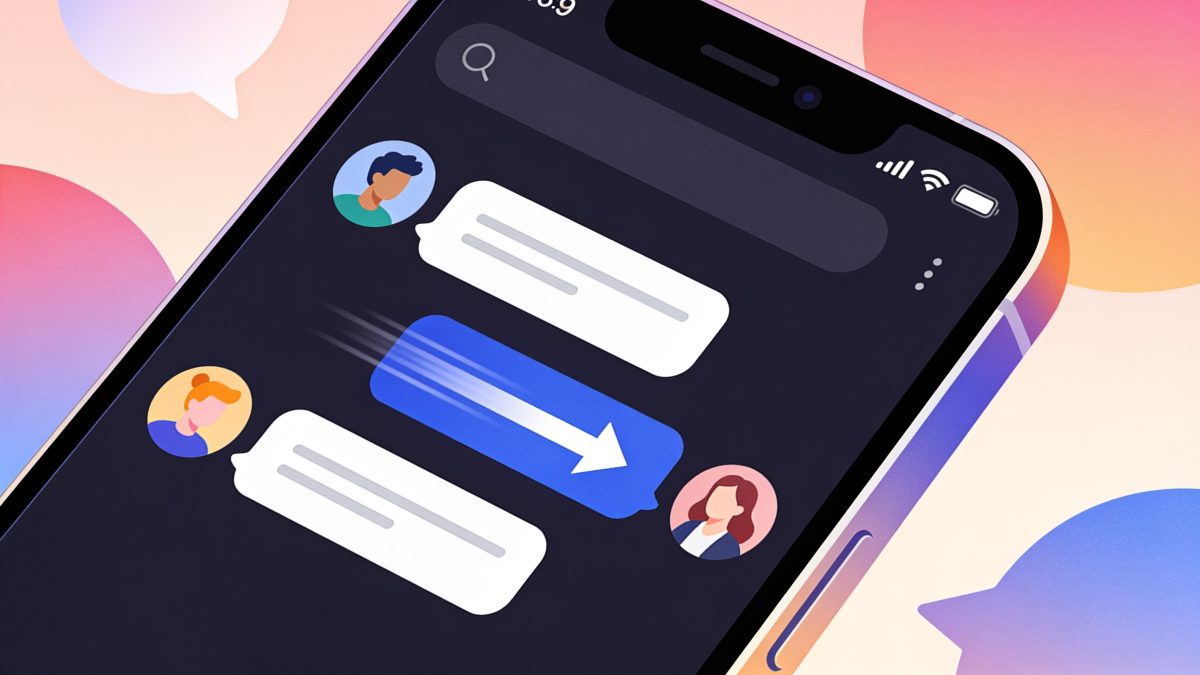
Instagram head Adam Mosseri recently confirmed what social media managers had suspected: “sends” — the number of people who forward a post through DMs — now carry more weight in the algorithm than likes or comments. That’s not a minor technical footnote. It changes what a piece of content actually needs to do to get distribution.
For years, most content planning optimized for the engagement that shows up on a dashboard: likes, comments, and Story reshares. All three are easy to measure and report. But Instagram appears to treat a different signal as a more honest indicator of quality — whether someone was moved enough to privately send that post to one or two specific people.
Why Sends Beat Likes as a Signal
A like costs almost nothing. One tap, no real thought, no social risk. A comment costs a little more since it’s public, but it’s often just an emoji or a tagged friend. A send is different — it requires deliberate choice. The sender has to pick a specific recipient and believe the content is relevant or valuable to that person.
Sends are harder to game with engagement pods or bots than like counts. A bot can like a post, but it can’t send it to another person in a way that looks natural — the algorithm can detect when a send happens because it involves a human judgment call about who else should see something. That’s why sends function as a more trustworthy signal for whether content has actual value to an audience, rather than just momentarily eye-catching it.
What Makes Content Worth Sending
Not all content has an equal shot at being forwarded. High-performing posts share a few consistent traits.
Sharp, Specific Relevance to One Person
Content that feels like “this is so you” for one particular person is far more likely to get sent than content that’s broadly relevant to everyone. Niche humor, inside references, or a specific observation about one profession or hobby gets forwarded to exactly the right person. The more narrow and personal the appeal, the more likely someone will think of a specific friend or colleague who needs to see it.
Practical Value the Recipient Can Use Immediately
Tips, checklists, or information someone can act on right away — a recipe, a recommendation, a how-to — give a sender a clear reason to hit send, because the recipient benefits from it, not just gets entertained.
A Format That Reads in One Glance
Content that takes real effort to understand tends not to get sent, because the sender has to be confident the recipient will actually take the time to absorb it. An overlong carousel or a video with a slow opening usually loses out to a format that lands the point in the first few seconds. People don’t forward friction.
What This Changes About Making Content
The implication is straightforward: a content brief that used to stop at “will people like this?” now needs a second question — “who would send this to whom, and why?” That reshapes how a content team picks ideas, because a post that’s broadly “good” but has no clear recipient stalls at likes.
It also means audience research has to get more granular. Understanding who follows an account isn’t enough anymore — you need to understand the actual relationships between followers (partners, coworkers, people who share a hobby), because content needs a concrete forwarding scenario in mind.
This kind of signal shift also reinforces that consistency and long-term strategy beat chasing a single viral post. An algorithm that rewards sends is, in effect, rewarding content that was built for a specific audience rather than generic, forgettable content made to look busy.
Adjusting a content strategy every time Instagram reweights its algorithm isn’t a side project — it takes ongoing audience research, consistent iteration, and someone actually tracking changes like this on a weekly basis. If an internal team is already stretched thin trying to keep up with algorithm shifts while maintaining content quality, see how dpanell’s Social Engine handles weekly research, writing, and publishing across platforms — always with a human reviewing every post before it goes live.